Commercial Snow & Ice Removal in Montgomery County PA
A single snowstorm can shut down business operations, create dangerous liability exposures, and damage your commercial property’s reputation. Commercial snow removal in Montgomery County PA isn’t optional for retail centers, office parks, industrial facilities, and multi-tenant buildings—it’s essential infrastructure that protects revenue, ensures safety compliance, and maintains accessibility when winter weather hits.
ADX Excavating delivers comprehensive snow removal throughout Montgomery County PA, serving Souderton, Hatfield, Lansdale, and surrounding communities with heavy equipment expertise and responsive winter site management.
Liability Protection and Customer Safety
Commercial property owners face significant legal exposure when snow and ice create hazardous conditions. Pennsylvania premises liability laws hold businesses responsible for maintaining safe access:
Slip and Fall Prevention: Parking lots, walkways, and building entrances become high-risk zones during winter storms. Uncleared snow compacts into ice, creating invisible hazards that lead to injuries and lawsuits. Professional snow removal eliminates accumulation before it becomes a liability issue.
ADA Compliance: The Americans with Disabilities Act requires accessible pathways year-round. Snow-blocked handicap spaces, ramps, and building entrances violate federal law and create discrimination claims. Strategic snow clearing prioritizes accessible routes and designated parking.
Documented Response: Insurance carriers and legal defenses require proof of reasonable care. Professional snow removal contracts provide timestamped service records, photographic documentation, and certified response protocols that demonstrate proactive risk management.
Retail centers with cleared parking lots report fewer incident claims and maintain customer confidence during winter months when competitors remain inaccessible.
Maintaining Business Operations and Revenue
Every hour a commercial property remains snow-covered represents lost revenue and damaged customer relationships:
Customer Access: Retail businesses lose sales when parking lots remain impassable. Customers who can’t safely navigate your property drive to competitors with cleared facilities. First-impression damage lasts beyond individual storm events.
Employee Attendance: Office parks and industrial facilities need staff on-site to maintain operations. When employees can’t safely access parking or building entrances, productivity stops. Remote work doesn’t solve the problem for manufacturing, healthcare, hospitality, or retail operations that require physical presence.
Delivery and Service Continuity: Loading docks, service entrances, and freight areas must remain accessible for inventory delivery, waste removal, and facility maintenance. Snow blockages disrupt supply chains and create cascading operational delays.
Tenant Satisfaction: Multi-tenant properties face lease compliance obligations. Commercial tenants expect uninterrupted access as part of their occupancy agreements. Poor snow management drives tenant turnover and complicates renewals.
Professional snow removal services operate on priority schedules that clear high-traffic commercial sites before business hours, ensuring employees and customers arrive to safe, accessible conditions.
Protecting Property Infrastructure and Landscaping
Winter snow management isn’t just about immediate removal—it’s about preventing long-term property damage:
Drainage System Protection: Snow piled incorrectly blocks catch basins, stormwater drains, and retention areas. When spring thaw arrives, improper snow placement causes flooding, erosion, and foundation damage. Strategic snow stacking preserves drainage infrastructure.
Pavement Preservation: Freeze-thaw cycles expand cracks in asphalt and concrete. Water infiltration from melting snow accelerates deterioration, creating potholes and structural failures. Proper ice management and melt control extend pavement lifespan.
Landscape and Curb Protection: Amateur snow removal damages landscaping, curbs, and site amenities. Professional operators know proper stacking locations that avoid crushing plantings, breaking light fixtures, or damaging underground irrigation systems.
Building Entry Integrity: Snow pushed against building foundations creates moisture infiltration risks. Proper snow management maintains clearance zones that protect structures from ice damming and water intrusion.
Commercial properties managed with professional snow services maintain higher property values and lower long-term maintenance costs compared to sites where snow is handled reactively.
Strategic Ice Management Beyond Snow Clearing
Snow removal is only part of effective winter site management. Ice control prevents the dangerous conditions that develop between storm events:
Pre-Treatment Applications: Anti-icing treatments applied before storms prevent snow bonding to pavement surfaces, making removal faster and reducing ice formation. Proactive treatment cuts labor costs and improves safety outcomes.
Post-Storm Surface Treatment: De-icing materials applied after snow clearing prevent black ice formation during overnight temperature drops. Calcium chloride, magnesium chloride, and treated salt blends work at lower temperatures than standard rock salt.
High-Traffic Zone Priority: Building entrances, crosswalks, handicap ramps, and parking lot drive lanes require more aggressive ice management than perimeter areas. Strategic material application focuses resources where liability exposure is highest.
Temperature-Responsive Service: Effective ice management adjusts to changing conditions. Professional services monitor forecasts and deploy treatments when temperatures hover near freezing—the most dangerous conditions for ice formation.
Retail properties with comprehensive ice management programs report 80% fewer slip-and-fall incidents compared to snow-only service contracts.
Equipment and Response Capacity for Commercial Scale
Commercial properties demand equipment and manpower that residential snow removal companies can’t provide:
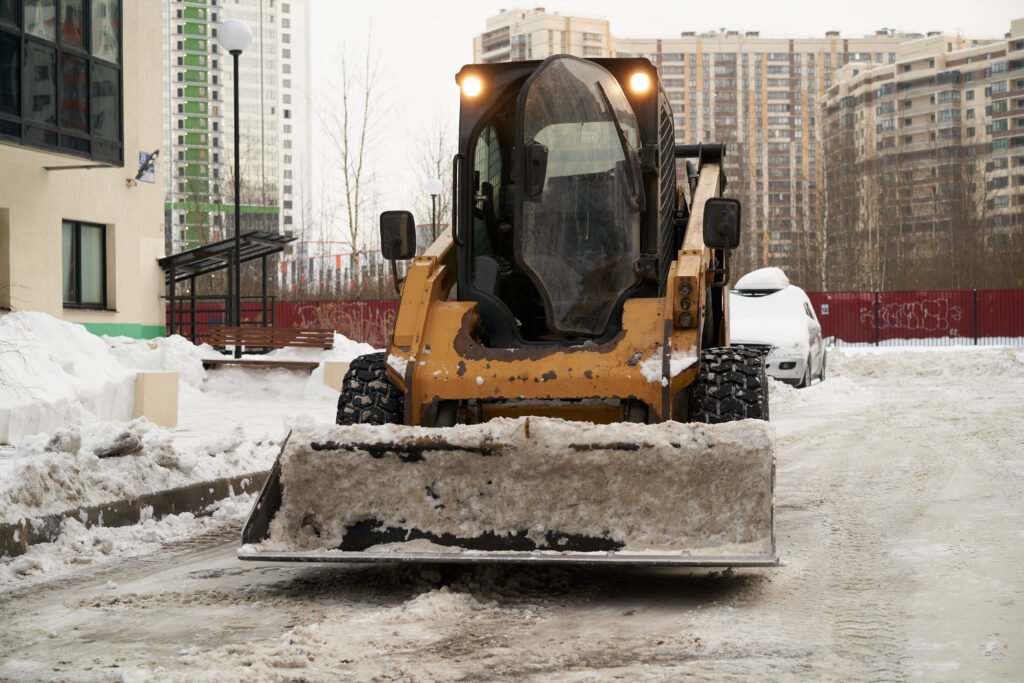
Heavy Equipment Access: Large parking lots require skid steers, loaders, and dump trucks—not just pickup trucks with plow blades. ADX Excavating’s commercial equipment fleet handles high-volume snow removal efficiently.
Multi-Acre Capacity: Shopping centers, industrial parks, and office complexes span multiple acres. Professional excavation contractors have the machine capacity to clear large sites within tight timeframes.
Snow Hauling and Disposal: When on-site stacking space runs out during heavy snow seasons, excavation companies can load and haul snow off-site. This prevents parking lot capacity loss and maintains full operational access.
24/7 Storm Response: Commercial contracts include guaranteed response windows—typically 2-4 hours from snowfall end. Professional operations staff multiple crews to cover contract obligations across service areas simultaneously.
FAQs
Q: When should commercial snow removal begin during a storm?
A: Most commercial contracts trigger service at 2-3 inches of accumulation, with continuous plowing during heavy storms. Priority sites like medical facilities and 24-hour operations receive service throughout storm events to maintain constant access.
Q: What’s the difference between commercial and residential snow removal?
A: Commercial snow removal uses heavy equipment, operates on contractual response times, includes liability documentation, handles multi-acre sites, and provides ice management programs. Residential services typically use lighter equipment with flexible scheduling.
Q: How do you determine where to stack snow on commercial properties?
A: Snow stacking locations are identified during pre-season site walks. We prioritize areas that won’t block drainage, obstruct sight lines, damage landscaping, or reduce parking capacity. As snow accumulates, we haul excess off-site to maintain full lot functionality.
Q: Do you provide ice management separately from snow removal?
A: Ice management is included in comprehensive winter maintenance contracts. We apply pre-storm anti-icing treatments and post-storm de-icing applications based on temperature conditions and forecast data.
Q: What happens if snow removal damages property?
A: Professional excavation contractors carry general liability insurance that covers property damage. Pre-season site walks document existing conditions, and operators are trained to avoid curbs, landscaping, and site amenities.
Q: Can you handle multi-location commercial properties?
A: Yes. We coordinate snow services across multiple locations throughout Montgomery and Bucks Counties, providing consistent response times and service quality across your entire portfolio.
Q: How far in advance should commercial properties contract for winter services?
A: Pre-season contracts should be finalized by October. This ensures equipment allocation, allows site walks to identify stacking areas and priority zones, and locks in pricing before winter demand increases.
Q: What’s included in a commercial snow removal contract?
A: Comprehensive contracts include snow plowing/removal, ice management, sidewalk clearing, specified response times, stacking area management, documentation and reporting, and 24/7 storm monitoring.
conclusion
Commercial properties can’t afford to treat snow removal as an afterthought. Professional winter site management protects customers, maintains business operations, reduces liability exposure, and preserves property infrastructure throughout Pennsylvania’s unpredictable winter months.
Get a free estimate for commercial snow removal and ice management services. ADX Excavating serves commercial properties throughout Souderton, Hatfield, Lansdale, and surrounding Montgomery County communities with reliable winter site solutions.
Call now to discuss your commercial property’s winter readiness and secure priority service before the next storm.